Why Ohio Farmers Hold On to Their Land; What a sheep farmer learned from Damian Mason about farm subsidies, land wealth, and who gets a chance to farm next

“Mao attacked farmers. Stalin attacked farmers. Now, world governments are attacking farmers. Same group throughout history. It’s a play book, it’s not a chance happening. Wake up…”
Jason Christoff
I saw the above meme on Substack the other day comparing what farmers face today with what happened under Mao and Stalin. I understand why it struck a chord. When the cost of running a farm goes up and the price you get for what you raise barely covers the bills, you have every right to question farm policy. But Mao and Stalin forced farmers into collective agriculture, and their policies helped bring about mass famine. If I want to understand why farmers here in Ohio are under pressure, I need to start with what’s happening here.
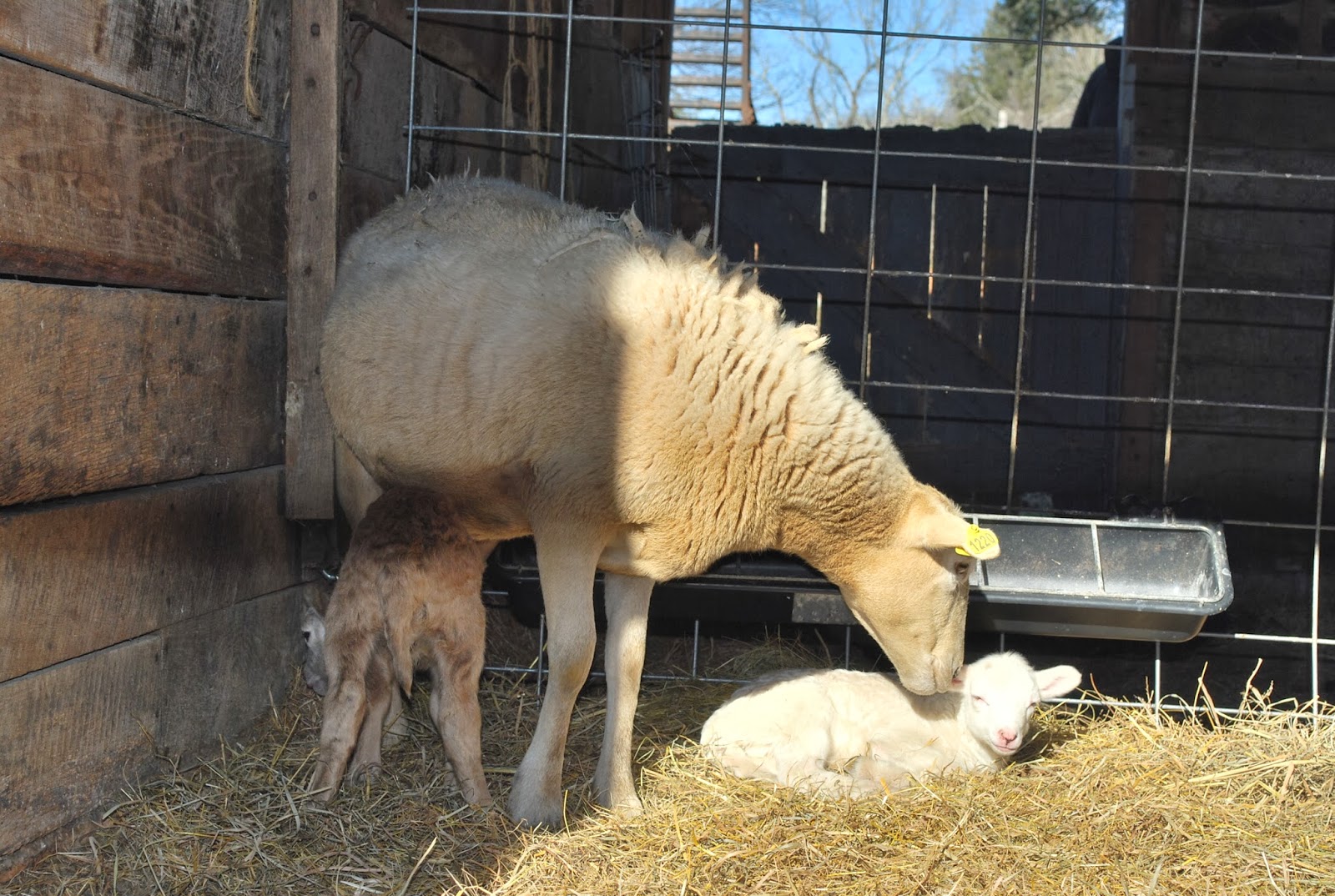
I raise sheep in southeastern Ohio, and my graduate work was in public administration and public policy. Even with that background, I had a lot to learn about how American agriculture works. I can tell you what goes into raising a lamb and getting it to market. I had a much harder time explaining how a corn grower decides what to plant when prices are down, or where government payments fit into that decision. If I had those questions as someone who farms, I can see why somebody who lives in town or in the suburbs would have them, too.
That’s one reason I started listening to Damian Mason’s The Business of Agriculture. Mason grew up on an Indiana dairy farm, studied agricultural economics at Purdue, and worked as a comedian. He brings some of that edge to his interviews. What keeps me listening is that he can explain why a farmer makes a decision in terms somebody outside that part of agriculture can follow. You can hear one story about fertilizer prices, another about farm labor, and another about low grain prices and still wonder how it all fits together. Mason gives you a way to start connecting those stories.
Why farmers keep planting
One question Mason keeps coming back to is who will buy the next bushel American farmers produce. For decades, the assumption was that rising demand and new export markets would give us somewhere to sell it. He questions how long we can count on that. When growers can produce more than buyers will take at a price that covers costs, another good crop can put even more pressure on prices. Mason on overproduction
That’s where the farm safety net gets complicated. A government payment can help a farmer get through a bad year. If it also helps keep acres in production when there’s already plenty of grain on the market, it can prolong the pressure it was meant to relieve. A farmer who keeps planting may be making the most sensible decision for his own operation. Multiply that decision across thousands of farms and you can see the problem Mason is talking about. Mason on subsidies and supply
I see a version of that question in my own operation. If I raise more lambs, how much more will I actually keep after the extra feed, hauling, and time? I know how to raise more sheep. I still have to figure out whether the market will pay enough to make the extra work worthwhile.
Why older farmers keep at it
In the 2022 Census of Agriculture, Ohio’s farm producers averaged 56.3 years old, compared with 58.1 nationwide. Here in Meigs County, 281 of our 788 producers were 65 or older, and 64 were under 35. Those figures count people involved in making farm decisions. USDA looked at a different group in its 2024 national land-tenure survey. The principal landlords who rented out farmland and did not farm averaged 69.2 years old.
One theme I’ve taken from listening to Mason is that there’s wealth in the land, and there’s also a life people enjoy living on it. If you’ve spent decades building a farm, you may have a good share of your wealth tied up in the ground. You may also look forward to getting back in the tractor every spring. From the outside, it’s easy to ask when a farmer is going to retire. I can see why someone who still enjoys the work would ask why he should give it up.
Think about what an air-conditioned cab and GPS-guided steering can mean to somebody who’s been planting corn for forty years. There are still long days, breakdowns, and plenty of work outside the cab. But if the equipment takes some of the physical strain out of planting, another season can look more manageable. If farm payments help cushion a bad year, that can also enter into the decision to keep going. How much it matters will vary from farm to farm.
An owner who’s ready to step back has another choice. He can lease the ground, collect rent, and keep the land in the family. For land that has appreciated over decades, federal tax rules can give a family another reason to hold it. Inherited property generally takes a tax basis tied to its fair market value at the owner’s death. And as Mason and farmland specialist Howard Halderman discuss, weak grain margins can coexist with strong land prices. An owner with substantial equity and little debt may have room to wait. When ground does come up for sale, an established farmer looking to expand can be a strong bidder. Someone trying to buy a first piece of ground has to figure out whether the farm can earn enough to carry the purchase. IRS guidance on inherited property
What would make a handoff possible?
I think there’s a case for a farm safety net. If we care about food security, we should ask what productive capacity we want to preserve through a bad year or a disruption. We should also ask whether the programs we’ve put in place still serve the purpose we intended. If the goal is to keep independent farmers in business, what are we doing to help the next farmer get established?
Ohio offers a tax credit to eligible owners who sell or rent agricultural assets to qualifying beginning farmers. A lease can give an older farmer a way to step back and give somebody else a chance to start. As a sheep farmer, I’d want to know whether I’d have the pasture long enough to justify putting in fencing and water. If I owned the ground, I’d want to know the person leasing it would take care of it and that I could count on the arrangement as I slowed down. Both people have something at stake before the first sheep goes through the gate.
I started with a meme that told me who to blame. Listening to Mason left me with a question I’d rather spend my time on. What would make it practical for an Ohio farm family to hold on to the land and the life it values while giving somebody new a real chance to farm?
That brings me back to the meme that started this article. Is the United States government out to destroy American farmers? I don’t see it that way. As a small sheep farmer in southeastern Ohio, I’ve received a couple of grants that helped me get past hurdles on my own farm. I know firsthand what well-targeted assistance can do.
What I’ve taken from listening to Damian Mason is that the way we design farm support matters. A payment can help a grower get through a bad year. If it also helps keep acres in production when there’s already plenty of grain on the market, it can prolong the very price pressure the farmer is trying to get through. That leaves me with a question about land here in Ohio. When an older farmer still enjoys the work, has much of his wealth tied up in the ground, and can weather a bad year, how much reason does he have to hand over the operation?
That’s where I think Congress has work to do. Farm programs deserve a fresh look as markets, technology, and farm families’ needs change. Can we help farmers get through a bad year while giving them room to try new ways of farming and giving the next generation a chance to get started?
Endnotes
1. Felix Wemheuer, “Collectivization and Famine,” in The Oxford Handbook of the History of Communism (Oxford University Press, 2013). Oxford Academic
2. Premier Crop Systems, “The State of Ag and Business with Damian Mason,” September 28, 2022. The interview transcript covers Mason’s Indiana dairy-farm upbringing, agricultural economics degree from Purdue, and work in comedy. Interview transcript
3. Conservation Stories, “Beyond Overproduction: Rethinking the Future of Agriculture with Damian Mason,” May 2, 2025. Mason’s discussion of overproduction begins around 5:11. Episode and transcript
4. Damian Mason, “Agriculture’s Incentive Problem: Subsidies and Supply.” In this public commentary, Mason argues that farm programs can encourage continued production even when commodity markets are oversupplied. Mason’s commentary
5. U.S. Department of Agriculture, “Young Producers Boost Great Lakes Agriculture,” September 5, 2024. Based on the 2022 Census of Agriculture, the average producer age was 56.3 in Ohio and 58.1 nationwide. USDA article USDA
6. USDA National Agricultural Statistics Service, 2022 Census of Agriculture: Meigs County, Ohio, county profile, p. 2. Meigs County reported 788 producers, including 281 age 65 or older and 64 under age 35. County profile PDF
7. USDA National Agricultural Statistics Service, “Most of the U.S. Rented Farmland Is Owned by Non-Farmers,” March 12, 2026. The 2024 land-tenure survey found that principal landlords who rented out farmland and did not farm averaged 69.2 years old nationally. USDA survey release
8. Internal Revenue Service, Publication 551: Basis of Assets, “Inherited Property.” The basis of inherited property is generally tied to its fair market value at the date of death, subject to exceptions. IRS Publication 551
9. Damian Mason, “Why U.S. Farmland Values Remain Strong in an Ag Downturn,” The Business of Agriculture, interview with Howard Halderman. The discussion covers why land values can stay firm despite weak commodity margins and the role of established farmers buying ground to expand. YouTube episode
10. Ohio Department of Agriculture, “Beginning Farmer Tax Credit Program.” The program offers a state income tax credit to eligible owners who sell or rent agricultural assets to qualifying beginning farmers. Ohio Department of Agriculture
11. Damian Mason, “Boomers vs. Millennials: What’s Behind the Generational Rift in Agriculture?” The Business of Agriculture, interview with Vance Crowe, October 19, 2026. The episode discusses rising asset values, barriers to farmland ownership, and the coming transfer of farmland. Apple Podcasts
One more Mason episode for readers: “Can American Agriculture Survive Without Farm Subsidies?” The Business of Agriculture, interview with Arkansas farmer Alicia Mooney, November 2, 2026. This is a good follow-up for readers who want to hear how emergency aid, input costs, and weak commodity prices look from a grower’s side of the ledger.

Comments